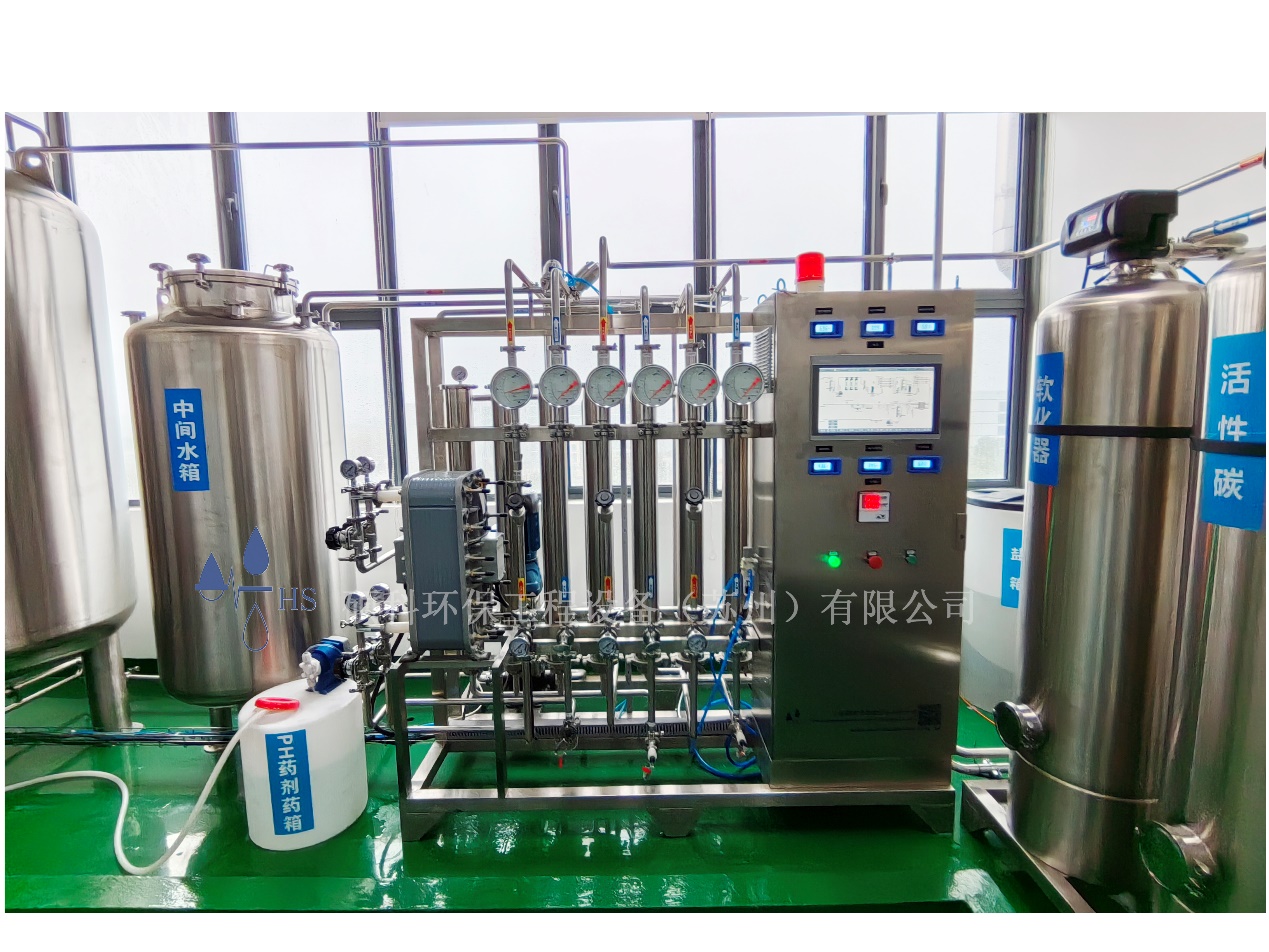

**Why Reverse Osmosis (RO) Water Purification is Necessary for Flower Seedling Cultivation and Tissue Culture**
Although soil-less cultivation technology for flowers is well-known, the use of purified water for irrigation in flower growing has not yet become widespread. Plants require nutrients that must be dissolved in water to be absorbed by their roots. Different growth stages and types of ornamental flowers have varying nutrient requirements. Using tap water to prepare nutrient solutions can interfere with nutrient precision due to inorganic salts, negatively affecting cultivation outcomes. Purified water reduces the interference of impurity ions and allows for precise nutrient formulation tailored to horticultural needs.
Additionally, salts in tap water can leave white spots on leaves as water evaporates, severely impacting the aesthetic quality of ornamental plants. In potted plants, limited soil capacity leads to salt accumulation from repeated tap water irrigation, resulting in soil salinization, which disrupts soil structure and hinders plant growth. Purified water, with its low salt content, prevents soil salinization and enhances nutrient salt utilization efficiency, contributing to desired flower cultivation aesthetics.
**Key Principles of Agricultural Water Use**
1. **Precise Nutrient Regulation:** Plant nutrient absorption relies on water for dissolution and transport. Different growth stages and ornamental types have distinct nutrient needs. Inorganic salts in tap water can cause antagonistic effects with target nutrient elements, leading to deviations from expected nutrient supply. Purified water serves as a 'blank canvas' for growers to finely adjust nutrient ratios, ensuring adequate plant growth while minimizing nutrient waste. Furthermore, watering with purified water prevents salt deposits from forming on leaves, maintaining their ornamental value.
2. **Strict Water Quality Standards:** The electrical conductivity (EC) of agricultural water should be limited to below 0.1 ms/cm (100 μs/cm) for purity. However, many horticultural facilities rely on untreated tap or well water, often exceeding 0.7 ms/cm (700 μs/cm). High salt levels adversely affect root absorption of water and nutrients, and certain ions (like boron) can harm sensitive flowers such as pineapples. Therefore, agricultural water must undergo desalination, with a stable desalination rate above 85%.
**Advantages of Reverse Osmosis Equipment for Agricultural Horticulture**
Current desalination technologies include electrodialysis, nanofiltration, ion exchange, and reverse osmosis, each with varying suitability:
- **Electrodialysis:** Achieves about 60% desalination and cannot meet the EC requirement of below 0.1 ms/cm, leading to its gradual elimination.
- **Nanofiltration:** Achieves about 80% desalination with selective removal of divalent ions like calcium and magnesium but is less effective for monovalent ions like sodium and chloride, making it unsuitable in high chloride environments.
- **Ion Exchange:** Although it can achieve high desalination rates, it requires acid and alkali regeneration, producing hazardous waste and posing risks of chemical leakage.
In contrast, reverse osmosis technology offers several advantages:
- **Stable Desalination Effect:** Consistently achieves over 85% desalination, easily keeping EC below 100 μs/cm, meeting strict horticultural water requirements.
- **Safe and Convenient Operation:** Fully automated with simple daily maintenance, making it easy to manage.
- **No Secondary Pollution:** Does not require acid or alkali regeneration, preventing chemical waste discharge and chemical storage risks, making it friendlier to flower growth environments.
Thus, reverse osmosis systems have become the preferred solution for producing pure water in agricultural horticulture.
**Applications of Reverse Osmosis Equipment**
- **Drinking Water:** Purified water, mineral water, spring water, bottled drinking water, etc.
- **Food Processing:** Cold drinks, canned products, meat processing, vegetable processing, etc.
- **Beverage Industry:** Carbonated drinks, tea drinks, dairy products, etc.
- **Electronics Industry:** Ultra-pure water for semiconductor, integrated circuit, and LCD production.
- **Municipal Water Supply:** Centralized water supply for communities, hotels, airports, and enterprises.
- **Industrial Production:** Glass washing, automotive manufacturing, electroplating, painting, and boiler softening.