

In the modern medical device industry, from the precision manufacturing of minimally invasive catheters to the sterile cleaning of surgical instruments, from the preparation of in vitro diagnostic reagents to the factory testing of implantable devices, purified water plays a crucial role throughout the entire lifecycle of medical devices. It serves as an "invisible cornerstone" ensuring the safety and functionality of these instruments. Heshuo has been deeply engaged in the water treatment field for many years and understands the stringent requirements of medical devices for purified water. Not only must it meet the basic standards of "no impurities, no microorganisms, and no pyrogens," but it must also be compatible with the process characteristics of different devices, building a robust defense for product compliance before leaving the factory.
In the production phase of medical devices, the purity of purified water directly impacts product performance. For example, when manufacturing high-precision endoscopes, purified water with a resistivity of ≥15 MΩ·cm is required to clean optical lenses. If the water contains trace particles or ions, they may adhere to the lens surface, causing scratches and resulting in blurred imaging. In the production of disposable syringes, purified water is used for mold cooling and component rinsing. If the TOC (Total Organic Carbon) content exceeds the standard (>0.5 mg/L), it may lead to the aging of plastic components, affecting the sealing of the syringe. Heshuo’s customized purified water equipment for production scenarios uses a “double-stage RO + EDI + precision filtration” process, keeping the conductivity stable at ≤0.1 μS/cm and TOC at ≤0.3 mg/L, perfectly aligning with the ISO 13485 quality management system requirements for medical devices.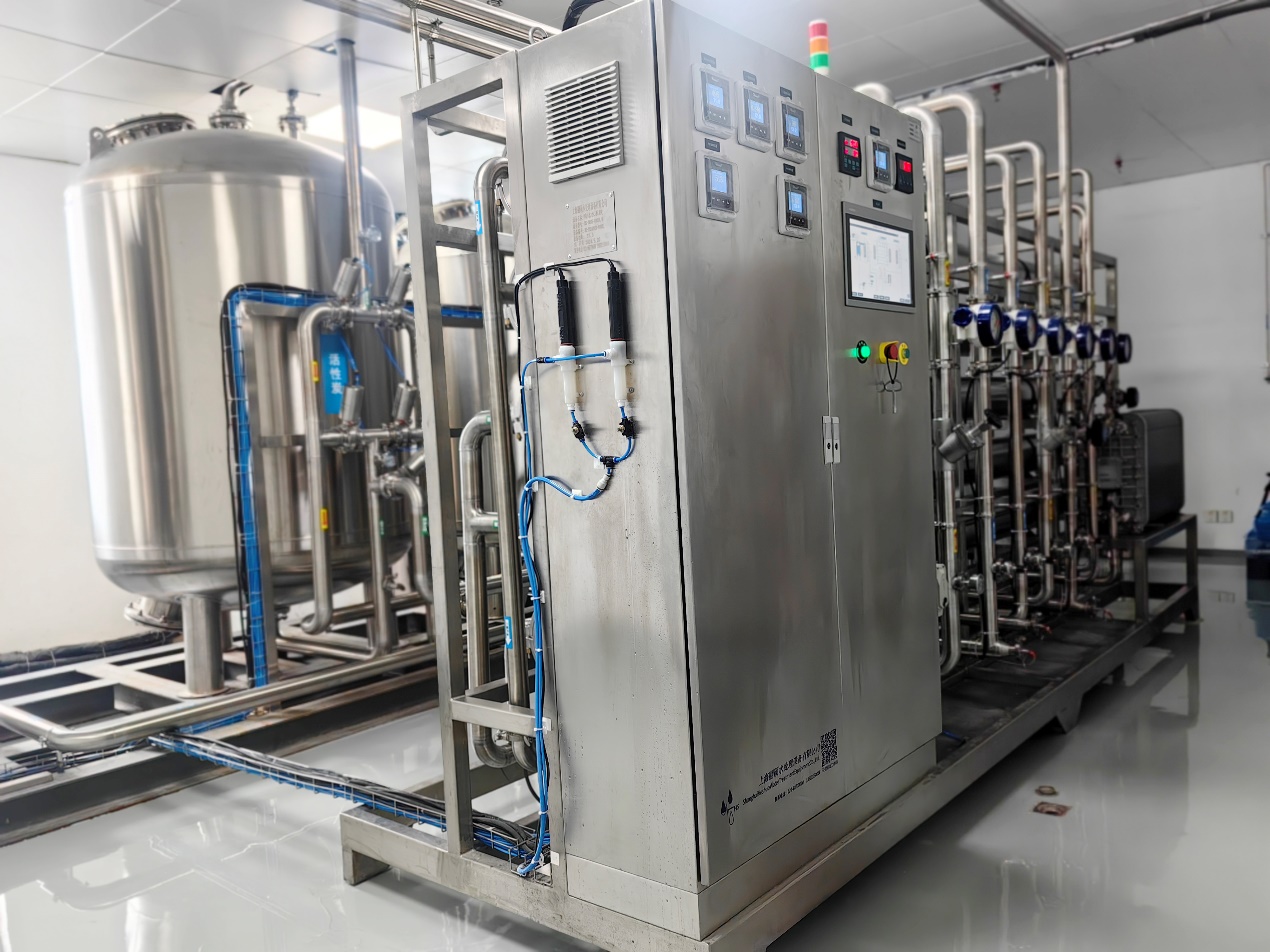
In the cleaning and disinfection phase of instruments, purified water is key in preventing the risk of cross-contamination. Reusable instruments such as surgical tools and dental examination machinery need to go through processes of pre-cleaning with purified water, enzymatic washing, and final rinsing. If the rinsing water contains chloride ions or microorganisms, it can lead to rusting of instruments and residual contaminants, thereby increasing the risk of post-operative complications for patients. To address this, Heshuo has designed purified water equipment equipped with an 80°C hot water circulation disinfection system and an online microbial monitoring module (total bacterial count ≤10 CFU/mL). It also uses 316L stainless steel piping with seamless welding technology to prevent biofilm formation on the inner walls of the pipes, ensuring that every drop of rinsing water meets the "Technical Specifications for Cleaning and Disinfection of Medical Devices."
Furthermore, in the maintenance of medical devices and the preparation of reagents, the stability of purified water is equally critical. When hospitals repair ultrasound probes, purified water is required to clean the coupling agent on the probe's surface, preventing impurities from clogging the probe chip. In the production of in vitro diagnostic reagents, purified water acts as a solvent, and fluctuations in water quality may lead to decreased sensitivity of the reagents and distorted test results. Heshuo employs an intelligent control system to real-time adjust parameters such as water temperature and pressure, combined with an emergency water supply system, to ensure stable water quality output 24 hours a day, safeguarding the quality of the entire medical device supply chain.